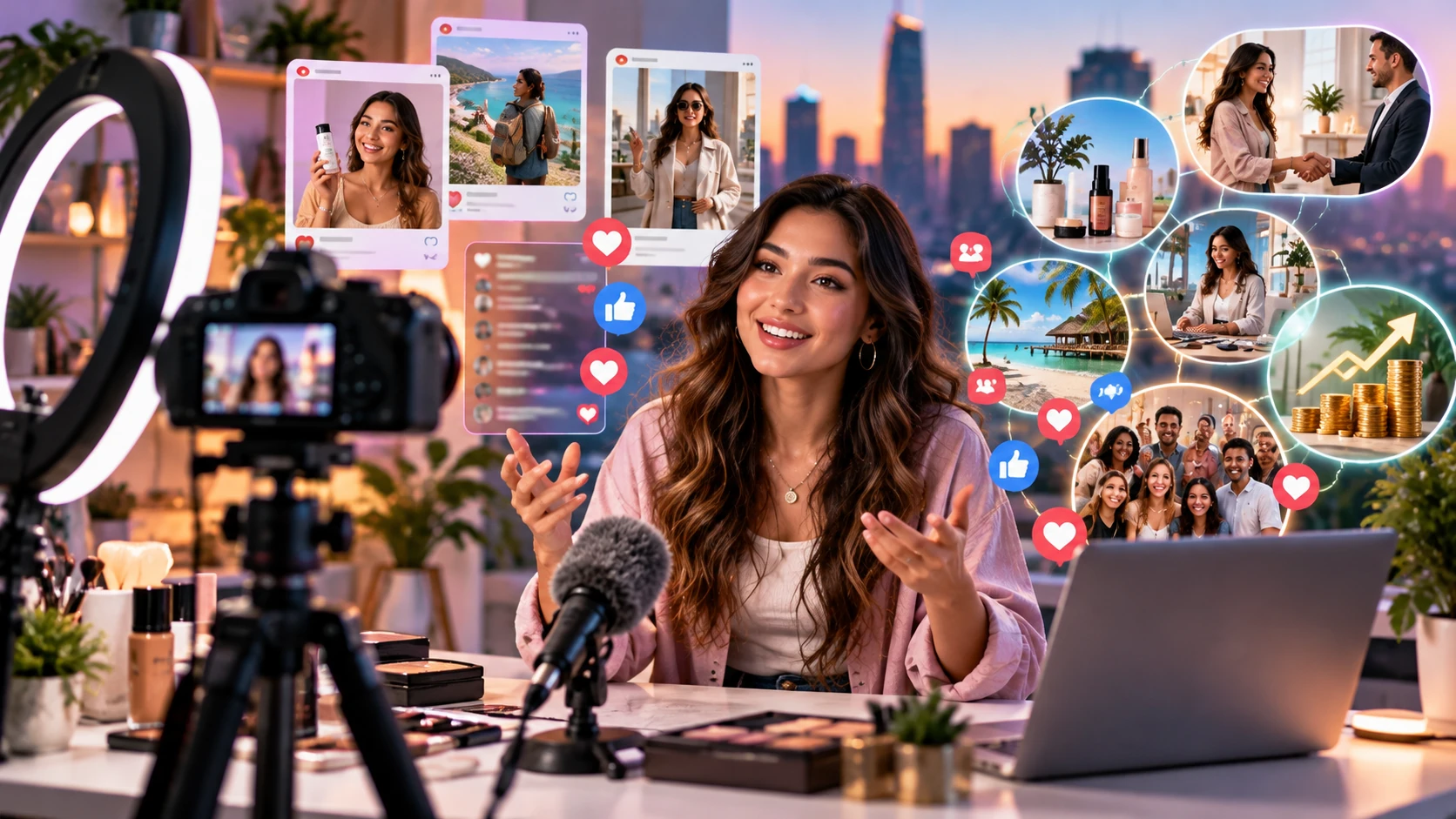
Influencer marketing has become an important part of digital advertising in India. Brands increasingly collaborate with content creators to introduce products, explain services, and connect with audiences through social media. From Instagram Reels and YouTube videos to educational posts and product reviews, creators influence how people discover and evaluate businesses.
1. Why Influencer Marketing Matters in 2026
People often turn to online creators for recommendations, demonstrations, entertainment, and practical advice. A creator who regularly shares useful content may develop a recognizable identity and a community of followers interested in a particular subject.
Businesses can use these existing connections to introduce their products to relevant audiences. For example, a skincare brand might work with a beauty creator, while a travel company may collaborate with someone who regularly shares destination guides.
India’s creator economy is also becoming more organized, with brands paying greater attention to campaign performance and longer-term partnerships. The Kofluence 2026 influencer marketing report highlights this shift, including growing interest in long-term creator relationships and more measurable campaign outcomes. <Cite refs={[“turn877270search0″,”turn877270search2”]}/>
2. Building Trust Through Authentic Content
Trust is one of the most valuable assets a creator can develop. Followers are more likely to pay attention when content feels relevant, honest, and consistent with the creator’s usual interests.
Creators can strengthen trust by sharing genuine experiences, explaining product features clearly, and discussing both benefits and limitations where appropriate.
For example, a technology creator reviewing a smartphone can discuss battery life, camera performance, price, and practical drawbacks rather than simply repeating a brand’s promotional claims.
Creators should also distinguish personal opinions from verified facts. Making exaggerated claims about a product may generate short-term attention, but it can damage credibility over time.
3. Choosing the Right Social Media Platforms
Different platforms serve different content styles and audience preferences.
Instagram: Reels, Stories, photographs, and live sessions can help creators build communities around fashion, beauty, food, fitness, and lifestyle topics.
YouTube: Short videos can attract new viewers, while longer videos support detailed tutorials, product comparisons, educational content, and reviews.
LinkedIn: Professionals can share industry insights, career advice, business knowledge, and educational content.
Facebook: Creators and businesses can use videos, groups, and community discussions to connect with particular audiences.
The best platform depends on the creator’s subject, production style, and audience. Rather than trying to be everywhere, creators can begin with one primary platform and expand when they have a manageable content routine.
4. How Social Media Creators Earn Money
Influencers can generate income through several methods. Earnings vary widely depending on audience engagement, content quality, niche, location, commercial agreements, and the creator’s ability to deliver results.
Sponsored posts and brand collaborations
Businesses pay creators to feature products or services in agreed-upon content. Payments may depend on the format, production effort, audience, usage rights, and campaign requirements.
Affiliate marketing
Creators share trackable links or codes and receive a commission when eligible purchases occur. This model can work well for product reviews, recommendations, tutorials, and comparison content.
Creators should disclose affiliate relationships clearly so audiences understand when a recommendation may generate income.
Platform monetization
Eligible creators may earn through platform-specific advertising revenue sharing, subscriptions, memberships, or other monetization features. Availability and eligibility depend on the platform, account, location, and current rules.
Selling products or services
Some creators sell digital guides, online courses, merchandise, consulting services, or products related to their expertise. This approach allows them to develop revenue beyond sponsored posts.
User-generated content for brands
Creators can produce videos, photographs, or testimonials for businesses to use in their marketing. In some arrangements, payment is based on creating the content rather than publishing it to the creator’s own audience.
5. Why Micro-Influencers Are Attracting Attention
Micro-influencers generally have smaller audiences than celebrity creators, but they may have strong connections with followers interested in a specific subject.
A local food creator, for example, may help a restaurant reach people in its immediate service area. A regional-language educator may connect with learners who prefer explanations in their own language.
For brands, the relevant question is not simply how many followers a creator has. Audience relevance, genuine engagement, content quality, and campaign objectives all matter.
Creators should focus on serving their audience consistently rather than purchasing followers or using artificial engagement methods. Inflated numbers do not necessarily translate into trust or sales.
6. Using Data to Improve Content Performance
Analytics help creators understand which content attracts attention and encourages meaningful action.
Useful measurements may include:
- Watch time and video completion rates.
- Saves, shares, comments, and relevant audience interactions.
- Profile visits and follower growth.
- Link clicks and product enquiries.
- Conversions and sales attributable to a campaign.
Different metrics suit different goals. A campaign designed to increase awareness may prioritize reach, while a sales campaign may focus on conversions and cost per acquisition.
Creators should use these insights to improve future content without assuming that every high-view video will produce commercial results.
7. The Role of AI and Regional Content
Artificial intelligence tools can help creators brainstorm topics, organize research, generate caption drafts, and plan production schedules. These tools may improve efficiency, but creators still need to check facts, respect copyright, and maintain their own voice.
Regional-language content is another important opportunity in India. Creators who communicate naturally in Hindi, Tamil, Telugu, Bengali, Marathi, Punjabi, and other languages can serve audiences whose interests may not be fully represented by English-language content.
Understanding local culture and audience needs can make content more relevant than simply following national trends.
8. Ethical and Responsible Influencer Marketing
As influencer marketing grows, transparency becomes increasingly important. Sponsored content and material commercial connections should be disclosed clearly in accordance with applicable advertising guidelines.
Creators should verify claims before promoting products, especially in areas such as finance, healthcare, and education. They should also respect audience privacy and avoid misleading guarantees about results.
Brands, meanwhile, should provide clear campaign expectations, agree on payment terms, and respect creators’ intellectual property and professional work.